Sunday, October 26, 2008

Review: Changeling

Lost and Found

At the very start of this movie, you know that you're watching a Clint Eastwood film. It's not because of the stylistic choice to use the Universal Studios logo from the early era to put in front of the film. It's not because of the broad landscape that automatically transports us to 1920s Los Angeles. Not even the photographic picture that drenches the scene in a beautiful florescence as we've seen so many times before in Eastwood's films. No, it's the music. That simple, harmonic collection of notes that doesn't make you think of a great conductor standing in front of a huge orchestra, but more like a lonely guy fiddling around with instruments in his basement that tries to put a lot of heart and soul into whatever he's working on. It's an element Eastwood has maintained in all his films, and I certainly felt that continued presence in this one.

The film tells the true story of Christine Collins (Angelina Jolie), a working, single mother in 1928 who cares for her only son Walter. One day, upon Christine's return from work, she discovers Walter has disappeared. She tries to work frantically with the LAPD in trying to find out where her son is. Finally, Captain Jones (Jeffery Donovan) comes to tell her that they've found him and he is alive. But the boy they bring back is not her son, Christine claims. She begins her own investigation, with the aid of prolific reverend (John Malkovich) to help bring down the LAPD. In an attempt to stop further embarrassment, the cops lock Christine up in a mental institution until she admits her "wrongs."

Eastwood is a master story teller, and while this particular film may not be on the same level as Unforgiven, Million Dollar Baby or Letters from Iwo Jima, it is still a finely crafted film. He has always been able to step back and let the scenery and actors serve as a guide to the mining out the greatness of a film, and it's an effort I've always liked. The script does feel a little heavy handed in its plot sometimes, and causes the film to run on a little long, but it scratches at surfaces that are essentially important. Another Eastwood film, Flags of Our Fathers, suffered from the story attempting to tackle on many elements that couldn't be contained within the frame of the film. Changeling does meander a bit, and at times wants to become a study on the treatment of mental patients and then an opinionated court room drama. However, unlike Flags, we are constantly given a reminder of the context of these sidesteps and it helps to justify the problem.

Jolie has always been a good actress, but people seem to forget that because she's a big movie star. We had further evidence of her talent last year in A Mighty Heart, a performance that was criminally overlooked at last year's Oscars. That performance was much more nuanced and layered. Here is a greater showcase of tears and shouting, but it's a bravado performance nonetheless. Second to her, I'd say a really great actor is Donovan. His character of the Captain must walk a fine line that dangles above the reasons of morality. You never get the sense that he's all bad, but you see how he acts the way he does because he's obligated to do so towards an institution he respects. As much as I like Malkovich, he never seems natural on film. He always takes that stage acting with him wherever he goes, and so his character feels less like a reverend but instead a John Malkovich interpretation of a reverend. It was also a bit strange to see him dig up his own sort of police force, as if someone like Malkovich could be that intimidating.

The movie isn't without its flaws, but there is still a great appreciation for this film. Guided by great performances and the master Eastwood, the movie is an emotional tale that serves to involve all. It will be interesting to see how this plays out, but with Eastwood releasing Gran Torino later this year, I think we'll realize that he should never exchange his great work for retirement. ***1/2 / ****; GRADE: B+

Tuesday, October 21, 2008

Review: Rachel Getting Married

Marital Bliss

Walking into this film, you might not know what exactly to expect. You might have an idea about the premise and the surrounding buzz, but nothing is really concrete enough for you to form a definite opinion about it. You'll be surprised by whatever outcome it has. I would certainly encourage all who are willing to experience this film, which is a great showcase for nearly every player involved.

Anne Hathaway plays Kym, a drug addict recently released from rehab who gets a break this weekend as she attends the wedding of her sister Rachel (Rosemarie DeWitt). With that comes the emotional baggage of dealing with her over controlling father (Bill Irwin), winning the attention of her passive-aggressive mother (Debra Winger), falling into a mild romance with another addict (Mather Zickel) who is also the best man, reconciling a strained sibling relationship with Rachel, attempting to overcome her addiction and, the heaviest of all, trying to come to terms with her past actions that resulted in the death of her infant brother.

The centerpiece of the film is clearly Hathaway. She is another in a long line of actors that have flexed their acting muscles in good roles (Brokeback Mountain, The Devil Wears Prada), but past work (The Princess Diaries, Ella Enchanted) has also prevented them from being taken seriously as a professional. This is the type of role that is truly breakout and Hathaway presents a character that can be subtle in one scene, overly dramatic in another, and yet always feel authentic in every one. As the title character, DeWitt is in a fantastic role that does well opposite Hathaway, always seeming frank and honest but never intentionally cruel. Other good supporting performers would be Irwin in an emotionally ranging role and Winger, though her character I think adds too much to late at a certain point in the film.

This is the first "real" movie Jonathan Demme has made since his remake of The Manchurian Candidate. Up until now, Demme has delved into documentaries, whose subjects have included Neil Young and Jimmy Carter. You get that sense of a documentary filmmaker in this film, especially in the beginning. The first moments of the film feel like Demme's transitioning from the documentary style into narrative film, and it's a little distracting at first. Then Demme settles down and lets the actors and story take precedence. The script by Jenny Lumet (Sidney's daughter) is filled with great moments, although much of it does meander into dragged out out territory and some elements and actions are written rather conveniently in order to move the story along. Also, when one first hears the score, it is unusually upbeat and creatively hidden (much of it is onscreen being played by the wedding's band), but it eventually builds up to a long dance scene that, to quote a favorite movie of mine, has "too many notes."

If anything, this is a superbly acted drama, with Hathaway dancing beautifully at the center. The premise drags on a bit and the script might be wrapped up a little too nicely, but these are flaws that do not bring great harm to the bigger picture. Anne Hathaway has finally been given the film that shows everyone she's more than just a face Disney used to employ, and I hope she, as well as Jonathan Demme, continue to make projects that excel even above this one. ***1/2 / ****; GRADE: A-

Saturday, October 18, 2008

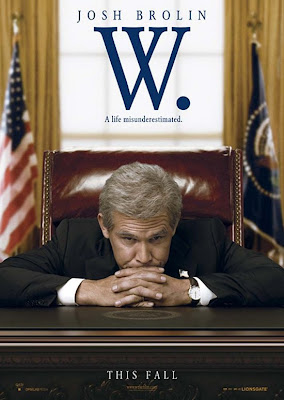
Review: W. & Max Payne

Presidential Duties

The idea for this film almost sounds like a joke. A movie about one of the most conservative and, at this point, unpopular presidents of our age that is directed by a filmmaker who has made it no secret how far left his vote will swing. And the timing of this film, to come out while the subject is still sitting behind the desk at the White House while an election attempts to distract the rest of us. All of this seems to add up to a movie that is destined to fail. W. is a film that, at many times, has the potential to slip and fall. Surprisingly, it manages to keep its feet on the ground and offer up a different perspective on a man you thought you knew.

Josh Brolin, hot off the double whammy success of American Gangster and the Oscar-winning No Country for Old Men last year, plays the title character (I believe the title's official pronunciation is "dub-ya"). Bush is taken on a wild roller coaster ride that shows his humble beginnings as a drunk trying to earn the respect of his father (James Cromwell) who eventually woos a respectable woman (Elizabeth Banks), then steps out of his father's shadow to become a born again Christian and run for governor, and eventually the White House. The rest, as they say, is history the next guy will have to deal with.

Oliver Stone would, at first, seem like the perfect choice to make a film about Republican president that many liberal entertainers have disagreed with. However, Stone takes a very different approach with this film. The film doesn't shy away from Bush's rowdy past, and it's the type of ammunition that one would expect Stone to have in his arsenal. The portrait he paints of Bush, however, is much more sympathetic (even more so than Nixon). Stone makes Bush out to be a product of his environment: from the arguments with his father, to his battle with alcoholism, to the influences and misinformation from the members of his cabinet. Stone doesn't excuse the actions that Bush has done, but he gives us a bigger picture of how he came to those decisions and shows that the blame may need to go around more people than just one. Stone creates a relatively even tone, and the screenplay by Stanley Weiser is very appealing, though I wish some characters didn't speak about Iraq like they're talking in hindsight.

Brolin is an incredible actor, and he proves it once again here. To me, it is the perfect balance of imitation and acting. Bush has certain mannerisms that are a staple to any impression, but Brolin doesn't pile it on and turn the film into an extended SNL skit. His Bush is a real person, and there is never a false sense of character when Brolin is acting. He actually draws us into this character more than we thought we would have. To be honest, none of the actors really resemble the real people they play, but I think that's a good thing. The towering James Cromwell isn't like Dana Carvey, but he makes Bush Sr. a sympathetic character as well. I dare anyone not to be moved in some way after witnessing his reaction to his loss of the 1992 presidential election. Richard Dreyfuss also adds more to the film, making Dick Cheney a man who worked more behind the scenes than one might realize. Even players like Toby Jones as Karl Rove and Jeffery Wright as Colin Powell are great additions. Two performers I didn't click with were a miscast Thandie Newton, who put too much emphasis on Condelezza Rice's voice, and, God love her, Ellen Burnstyn who acts a little too soap-operay as a nagging Barbra Bush.

To return to this thought, it is Weiser's screenplay that hurts the film at points, and Stone's return to the melodramatic metaphors don't help either. Some scenes do appear out of place, and Weiser and Stone would argue they are essential to understanding Bush. The prime example would be the continuing reference of Bush in the middle of a baseball diamond with the screaming of unseen fans roaring in the bleechers. At times, these are moments that enforce an idea that was already boiling to the top in other scenes, and often times they take the momentum out of the film. They are intriguing scenes to watch, but not for as long as the movie lets us.

The timing of this film is unbelievable. Because Bush has yet to leave office, we do not get that scene where he's a seventy-five-year-old man sitting in his rocking chair on his farm in Texas talking to an even older Cheney about the mistakes and triumphs of his presidency. But I don't think we need that scene because, in essence, we don't care what happens next. The film isn't about predicting the future anyway; it's about piecing together the past. Stone, I think, has finally grown up as a filmmaker, not really becoming more conventional, but he doesn't have the same rebellious spirit that a younger filmmaker might have had. I think that's an improvement, because I don't believe a younger Stone would have been able to make a film that paints this man in such a sympathetic portrait before. Much to the thanking of Brolin's great performance, the film might make you think a little harder about the man that this country has spent eight years despising who did all he could to please us. ***1/2 / ****; GRADE: A-


Pain's the Game

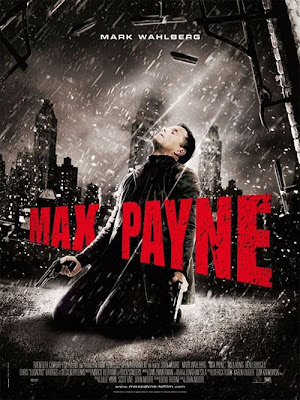
It's tough for video game movies these days. No matter what, it seems like they're all destined to fail. I mean, just look at their track record: Resident Evil, Silent Hill, Doom, none of them worked. Even the only one that happened to succeed slightly, Mortal Kombat, was a very mild success. Still, the point is that they keep making money, despite the critical bashing they receive. I feel that's a shame because it gives people excuses to make this type of film, which is a rancid, nonsensical piece of garbage that drives one to the brink of insanity.

Mark Wahlberg is all frowns and faces in the title role that is, again, based on the popular video game. I don't really know why it's so popular, since the story is another Death Wish rip-off that shows police detective Max Payne, recently assigned to cold cases, who now prowls the streets searching for the ones responsible for the murder of his wife and daughter three years ago. His journey into crime's underworld has him facing off a femme fetal (Mila Kunis), a drugged up gangster (Amaury Nolasco) and an evil company, whose head of security (Beau Bridges) used to work with his father on the force.

Notice that I didn't mention any major plot elements. That's because I didn't care what the plot was, and neither will you. However, I didn't care what it was because it made absolutely no sense, even for a film based on a video game. The story meanders and weaves in and out of different areas until the whole thing is a jumbled mess that carries on for far too long. In the unimpressive hands of John Moore (Behind Enemy Lines, Flight of the Phoenix (2004) and The Omen (2006) are some of his "highlights") the film is shot in a way over the top fashion. Not the fun kind of over the top, but the kind that overcompensates for an embarrassingly weak story (i.e. Wanted). It may have been Moore who bragged about the film's use of slow motion "bullet cam" or whatever it was called, but what it really does it disappoint on an immense scale for making the movie seem more ridiculously over the top than it already had been up to that point, such as when Payne gets nearly twenty shots off his pistol without even reloading once.

It would be an understatement to say that Beau Thorne's script is riddled with wooden dialogue and mediocre set pieces, but ever character is written as if they are the first of their kind: the disgruntled ex-cop, the mysterious head of the company, her ostracised serf of an assistant, and so on and so on, and then these characters go over the top in every scene. It's even sadder that the whole film feels that way, whether it's the overtly shadowy lighting from Jonathan Sela, overly dramatic score from Marco Beltrami, or the deafening sound effects track that make The Incredible Hulk sound like this year's lullaby.

However, the misuse of its cast is the most depressing aspect of the film. It's not bad acting, it's unfulfilling and wasted acting (sorta like saying, "I'm not mad; I'm disappointed.") After years of showing his pretty face and well sculpted body, Wahlberg was finally able to offer his personality in the hands of a brilliant director and contorted it until we got him in a riveting role that amplified his acting abilities without showboating it. That's why Wahlberg got a gratifying Oscar nomination for Martin Scorsese's The Departed. Now, it's like Whalberg has returned to the roles that plagued him years before, adding absolutely no emotion to this character to make him a figure to watch. But it's the appearances from people like Kunis, Bridges and Chris Bridges (a.k.a. Ludacris) that really bring the film down. They're talented actors, like Wahlberg, only they believe they can elevate the material; I never got the feeling Wahlberg had that same mentality. To seem them in this movie is painful because they are trying to work with material that doesn't work with them back. It's a great waste of talent that is also peppered by the occasional bad acting (Nolasco and Chris O'Donnell, two actors I usually like, go past the status of cult favorite to just horrid).

It's an action movie based on a video game, and with that, there are certain things you have to accept that will not be a focal point, like plot. But even for an action film, the movie still feels flat. Not only is it completely implausible, but it's an action movie with no action. That is, there is never any momentum in the movie and every scene remains in stasis, with no help from its director or underdeveloped cast. I didn't think that I could find a movie that would top insanely bad 88 Minutes as the year's worst film. But that was before I met Max. ZERO STARS / ****; GRADE: F

Saturday, October 11, 2008

Review: Body of Lies

Spy vs. Spy

Ridley Scott is truly, without a doubt, one of the most gifted filmmakers that has ever lived. For years, he has given us magnificent films ranging from the superbly suspenseful Alien, the visually arresting Blade Runner, the great comedy Thelma & Louise, the intense action epic Black Hawk Down and the grand masterpiece of Gladiator, which claimed the prize as 2000's Best Picture. He's fantastic, but I must lament that he's been disappointing me lately. He's only making good films. They're not great, just good. One might not think that's a bad thing, but comparing that list of films to Kingdom of Heaven, A Good Year and American Gangster can make one feel a little sad for this fantastic director. This particular film isn't the absolute best from Scott, but I will say that it is pretty damn good.

The film centers on Roger Farris (Leonardo DiCaprio). Farris is a CIA operative sent into Jordan to help track a prolific terrorist that has claimed responsibility for several attacks across Europe. While he is there, he is constantly in contact with his superior back in the states, Ed Hoffman (Russell Crowe, who gained 60 pounds and a Southern accent for this role). The two of them go after each other, always bickering but retaining some level of respect for each other. The two are bumbered by a Jordan royalty figure (Mark Strong) who works with Farris on the condition that he remains cooperative with his rules as well.

Walking into this film, I was very surprised at how Scott was able to remind me of his roots. Black Hawk Down gave further proof that Scott is more than proficient in action films, and many scenes back that notion up here. Scott isn't at the very top form here, but he still manages to craft the story very convincingly. William Monahan, the Oscar-winning writer of The Departed, sets up the story a little weary in the beginning, as the film has a difficult time setting up a cohesive narrative. Then, after the film's first major battle scene, the story expands out into the different characters. I don't think Monahan is a real reason the film works. His script is very cryptic at times, and the scenes are aided more by Scott's direction of his actors than the framing of the dialogue.

On that note, Crowe is the film's greatest asset. Many people know of him as a heroic leading man, but here he gets to show off his uncanny ability to portray himself as a magnificent character actor. He dedication to the role is very convincing. DiCaprio has always been an actor that I think was much better than was said about him (I personally named him Best Actor in 2006 for The Departed), but he's never glowingly amazing here. He's very good, but standing up to a very impressive Crowe doesn't help his case. There is also a great performance from, as I can only predict, a forgotten Mark Strong, who adds a bit more sophistication and intrigue within the story.

Still, the movie always feels it's on the brink of being a truly great film. The beginning's difficulty to be a successful narrative is one problem, but a bigger one is the film's implant of a love story between Farris and an Iranian nurse he meets. The set up is interesting, but they usually lead to scenes that feel forced for comedy (a dinner scene) or they present very preachy messages in a film that tries to stay away from those types of topics. The love story isn't completely meaningless to the plot, and it's interesting the way Monahan tracks the development of this segway, but I felt it ultimately pushed the film into territory that could have either been eliminated or altered.

It's been a long time since I've liked a Ridley Scott film this much. It's not a great masterpiece, but it's one that has his style throughout and is gifted with a great cast. The story structure isn't the best, but its tale keeps you mostly engaged from beginning to end, although I would think that the ending needed a Blade Runner: Director's Cut style ending that implies more ambiguity. I don't think this will get Scott his long overdue Oscar, but it makes a great case that we'll have something in the future. ***1/2 / ****; GRADE: B+

Tuesday, October 7, 2008

Review: Religulous

Heaven Can Wait

No matter what you may say or what you may think, Bill Maher is a smart man. For those who might want to disagree, I'll put it another way: Bill Maher is not an idiot. He is an intellectual comic who does indeed look into and do research on the subjects he is ripping before he really lets the joke fly. It's a commendable quality that, often by comics, is put to the use of satirizing an idea that many have to come believe true in their lives. And that is what precisely Maher wants to attack in this film: the idea of blind belief, in this case religion. Maher goes all out for this very provoking documentary.

Maher travels the globe in search of experts to comment on that touchy subject of religion. He doesn't analyze every religion, but focuses on the "Big Three," those being Christianity, Judaism, and Islam, with the first and the third taking a higher presence in the film. Maher does go into some weird territory with different sects of religious groups, but he generally stays the course in talking with priests and rabbis who give their views in supporting their religion with the usual heavy handed questions given by a cynical Maher.

Maher has an agenda with this film, and it does center on a general attack against religion. His basic view is that religion is the heart of all evil, and any connection to it should be looked at as an act of insanity or it's blind ignorance from otherwise smart individuals. Maher does bring up interesting topics of discussion, and it is appreciated that he goes after those religions that we are most comfortable with (Christianity, Judaism), those we have no problem mocking (Scientology, Mormonism), and even ones that we would love to debate but are too afraid to say anything in fear of retaliation (Islam). You might think Maher is rude and unkind, but he is certainly not biased. That is, he isn't biased in the way he attacks religions he doesn't believe in.

As intriguing as the film is, it does suffer from a setup that diminishes its credibility. Directed by Larry Charles, who brought audiences Borat two years ago, there is already a sense that many scenes are going to be "gotcha" moments that earn laughter simply because the religious person is at a loss of words. To me, that is not funny nor enlightening. We know that religious intellect only goes so far, so I would have liked to see Maher probe deeper into his questioning instead of leaving us with a blank stare. To be completely honest, the funniest moments don't come when he's talking to the dumbfounded religious fanatics, but when he is doing stand up material that is unrelated to the topic (the best example would probably be when he is talking with a Latino man who claims he is the "second Jesus Christ" and Maher intercuts moments of Al Pacino's Scarface). However, when Maher goes after some religions, like Mormonism and Scientology, they seem like too easy targets. And his one journey into a religion that focuses an emphasis on marijuana seems completely unnecessary and seems more like an excuse to travel to Amsterdam, smoke pot, put it on film and have no consequences for doing so.

The bottom line that Maher puts forth is that religion is bad and any rational person shouldn't believe in it. That's a very easy thing to say from someone who is an atheist. For the rest of the world that finds themselves either grasping onto a certain religion or remaining somewhere in the middle, Maher's message is a hard thing to take in. His ending message about the stupidity of believing in any kind of higher power is a downer of a thought, especially when it is immediately followed by images of bombs going off and a thought of an apocalypse. Maher doesn't give any answers to the truth behind religion because he doesn't want to. He only wants to put forth doubt, which I think is the same copout he labels other who believe in religion. However, the film is very thought provoking, and is bound to stir up a conversation within you so greatly that you wish you could just walk into the film and talk with Maher yourself. But something tells me he'll just be as close-minded as the rest of us. But he'll still let us talk, and that's what he'll certainly let everyone do. *** / ****; GRADE: B

Saturday, October 4, 2008

Reviews: Appaloosa & Blindness

Bile Bile West


God love them for trying. No matter how many times people cry out that westerns are dead, there's always a group of people ready to make a movie that tries to prove them wrong. And it seems to be that this new decade is a grand force of ushering in a revival for the genre. Last year, we had two: James Mangold's remake of 3:10 to Yuma and the Brad Pitt-Casey Affleck starer The Assassination of Jesse James by the Coward Robert Ford, one of my absolute favorites from the year before. Now, Ed Harris has thrown his hat into the ring for this film, not only as actor but director and co-writer as well, which is a pleasantly enjoyable, but occasionally murky piece of work.

Like many westerns that were produced, this one follows the shoot 'em up formula that also inspires the "buddy" tale. Harris plays Virgil Cole, a hired gun that travels around cities looking to install justice along with his friend and partner Everett, played by Viggo Mortensen. The two gentleman are brought to the particular town of Appaloosa to enforce the law among a group of bandits and criminals, head by the notorious Randall Bragg (Jeremy Irons). If trying to keep these bad men in line wasn't enough, they also have to try to pin a multiple murder on Bragg, and a new lady has moved into town (Reneé Zellweger) and is vying for the affection of both Virgil and Everett, all before the action really starts to heat up.


Harris is certainly not an amateur director. Even though it's been eight years since he last stepped behind the camera for Pollock, his light touches of direction fill the gigantic canvass of the film. He is a man who has a lot of respect for this genre, and his style and plot structure within the script, which he co-wrote with first time writer Robert Knott, tries to convey a simple and elegant tale that was present in those old westerns. The problem is that the film is so much like those old westerns that it's difficult to say if this film is like one of them or is simply imitating them. I felt Mangold did that last year, and I fear Harris has done it as well. The entire movie feels like a John Ford western that has updated for today, even though Harris's direction is probably more maneuvered that Ford would have done. One could argue that's not a bad thing, but I find it pure imitation without anything behind it. There are bonus technical points for the beautiful scenery by Dean Semler, but its quickly taken away by the modern, and occasionally distracting, score provided by Jeff Beal.

As an actor, Harris definitely tries for a John Wayne type, and his character comes off like that. He's heroic and strong, but is occasionally naive about women around him and the intellectuals of the world. Mortensen's character is obviously supposed to foil Cole, but this is a role that Mortensen, or anyone for that matter, could probably play blindfolded. Jeremy Irons is very effective as the villain, as he always is, but something tells me it will be difficult to explain his retained English accent. There's also some very good character actor work from James Gammon, Timothy Spall, Gabriel Marantz, and Lance Henrickson in the background of the story. However, I wish that Zellweger wasn't continually the weakest part of every film. I don't think she's a horrendous actress, but I always get the the feeling that these two men should not be fighting over her affection. Then again, the film only shows roughly four women in the whole town, so variety may not be a luxury of theirs.

The film I thought was the second best last year was a western. But I loved it because it was unconventional. It was a western that took a different approach in its story, using a familiar set up but instead forcing the audience to take a long, drawn out, and superbly crafted character study. Appaloosa fails to go beyond its boundaries, and ends up becoming a reincarnation of the films from the old days. Still, Harris and company do fine work, and its easy to lose yourself in the majesty of the canvass. However, if you feel like a void is missing after watching it, I would recommend The Man Who Shot Liberty Valance, and let me know if imitation is truly the highest form of flattery. **1/2 / ****; GRADE: B-


Blind Fury

When this film had the distinguished privilege of being selected as the opening film at the Cannes Film festival, that was already a greatly bestowed honor. After the film was shown, there were whispers going around that there were some big problems in it. So then, the studio pressured the director to do what any other studio would pressure a director to do when there's a potential for the test audiences to respond negatively: they ordered a re-cut. To the best of my knowledge, the new version that now shows in the theatres today is a slightly improved version from the one that premiered earlier this year. Be that as it may, Blindness is still an insanely jumbled thriller held together by an overbearing message and convenient plot device.

All of the characters in the film are not named, so when a man in a car (Yusuke Iseya) starts seeing the world in a pale white tone, it seems to be completely surprising, as well as when his car gets stolen eventually by the Thief (Don McKellar, who also wrote the screenplay). Soon, it is discovered that this blindness has turned into an epidemic spreading through the films unnamed country. Even the local eye doctor (Mark Ruffalo) contracts the disease, but his wife (Julianne Moore) seems to remain immune. Fearing a spread of infection, the government quarantines the newly blind in several wards that then start to feud with each other, with the King of Ward Three (Gael García Bernal) taking charge and wrecking havoc before hell really breaks loose.

Director Fernando Meirelles is a truly gifted filmmaker, and I still consider his breakout his to American audiences, City of God, to be a true masterpiece in any age. There were times when I was deeply impressed with his direction here as he tries to put forth an allegory that is shrouded by shadows and fuzzy images. Sometimes, though, Meirelles is very maneuvered with those allegories, and the message of self-destructing human nature is weakened by its overbearing presence. Still, at least Meirelles knows how to still use his Oscar-nominated cinematographer and editor. César Charlone drenches each scene is a beautiful milky white that truly enhances the loss of sense within the film, and Daniel Rezende's tight and clever editing is something to behold, even when the musical score is at times just as preachy as the messages.

I don't think anyone can say that the film isn't well acted, but many could argue that the most talented aren't used to their full potential. I get the feeling that players like Moore and Ruffalo are holding back something in their scenes, particularly Moore. She's magnificently talented, but there's never any great momentum within her. Other well known actors, like Danny Glover and Sandra Oh, are given basically extended cameos in underdeveloped roles. However, I most disappointed in the limited time given to Bernal. He always knows how to be one of the best parts of a film (see: Babel), but often subjected to being one of the least used talents in those films (again, see: Babel). He always commands an amazing presence, especially when he is fighting against Moore's character. The two of them have more believable chemistry than anyone else in the film, despite their screen time together probably totaling only two minutes. It's a shame, because the feud between these two were of great caliber, and its a shame it was used so little.

Even at just reaching the two-hour mark, Blindness still manages to drag on, especially in its third act which broadens the film's scope just as the audience has already settled into the hellish conditions in the wards. At times the film is effective, but it mostly consists of a laborious message that is tangled within a heavy handed plot. Despite the best intentions of an underused cast, the film fails to become anything truly marvelous, and instead wanders in its own blind sense of self-righteousness. ** / ****; GRADE: C

Saturday, September 27, 2008

Reviews: Eagle Eye & Miracle at St. Anna

Big Brotherly Love

The term "event movie" is not something that has just been presented to movie-going audiences. They've been around ever since the three-hour plus Gone with the Wind came to audiences and attempted to thrill them with a sheer grand scale and great spectacle of the visuals. Since then, movies continuously aim for that type of class, always wanting the audiences to fall in love with the scale. Sometimes, however, that gets in the way of some other minor details, like, oh say, the plot. Such is the case with this film, an absurd presentation that still manages to keep you in your seat for its entire duration.

After the film's obligatory opening shot of an attack on a possible terrorist unit in the Middle East, the film opens on Jerry Shaw, played by new hot talent Shia LaBeouf. Jerry is an average Chicagoan (our city has been showing up a lot in films this year) who has traveled the world to "find himself" along with finding debts, family tensions and a low paying job. One day, he finds his bank account filled up and his apartment stocked with weapons and military equipment. Then, a voice from a call tells Jerry to run. He doesn't, and he's captured by the FBI and interrogated by agents trying to figure out what's going on (Rosario Dawson, Billy Bob Thornton). However, the voice has more in store for Jerry and plans an escape for him. That leads him to Rachel (Michelle Monaghan), another unfortunate victim of the caller who goes on the wild trip with Jerry as they are being moved around like pawns.

The film is a classic example of how the seed of a story is better than the actual execution. In the world we live in today, the idea of an overly invasive government not only peering, but controlling everything is an interesting thought. However, the film wants us to believe that the events are to be taken with a scent of realism. The government may be big, but it isn't as organized as this film portrays it as. That idea, plus territory from 2001 where technology backfires on its creators, is not anything original (director D.J. Caruso already knows about unoriginal ideas from Disturbia). However, I do give Caruso credit for knowing how to film some really interesting, if a tab implausible, chase sequences, despite a background that doesn't support him.

LaBeouf is the go-to-guy right now for films, and he is a very good actor. I am still waiting, however, for a role from him that will convince me he is a great one. I believe he has the capability, but a role that is essentially the grown-up version of his part in last year's mega-hit Transformers is not really letting me believe otherwise. The film also suffers from the two leads having absolutely no chemistry with each other, despite some good acting. The character actors in the background are also good (Michael Chiklis is terribly miscast as the Secretary of Defense), but they take a backseat to the film's fast paced plot.

This movie has flaws in it, but it still manages to keep you going. That is until about the last twenty minutes of the film, when every twist becomes completely predictable, and the ending chooses an onslaught of cliches and cop outs that had they been installed earlier would have left audiences jeering more than they would. But, taken for what the film is, it is a very worthy treat to audiences, even if the event might just be to finish your large tub of popcorn. *** / ****; GRADE: B


Why We Fight

It would be nice to preface this review with a little story, something that seemed little at first and then quickly grew into something bigger than it actually was. It started on a cool day in France during the Cannes film festival, where Spike Lee, in an obvious ploy to promote this film, attacked Clint Eastwood's films Flags of Our Fathers and Letters from Iwo Jima for failing to include any black soldiers, despite that fact that the army was still segregated at this time. This prompted a war of words between the two filmmakers, with Lee proclaiming Clint was an "angry old man" and insinuated that he was a possible racist, and Clint simply say a guy like Lee should "shut his face." That brief war between the two was more exciting, and mysterious, than Lee's actual film, which is very ambitious, maybe a bit too much, but has enough passion running through it where you can see the importance it wants to convey.

The movie, which is based off of the James McBride novel, opens with a postal service worker who, without any provocation, pulls out a Luger and shots a customer point blank range. While institutionalized in a mental hospital, a reporter (Joseph Gordon-Levitt) goes in to interview the man. This sets into motion a flashback, which tells the true story of the Buffalo Soldiers, an all black regiment during World War II sent to fight Germans in occupied Italy. Among the chief players are the overbearing and collective staff Sargent (Derek Luke), the wild, flirtatious skirt chasing sergfent (Michael Ealy), the overtly religious and eagerly excitable private (Omar Benson Miller) and the calm and intellectual corporal (Laz Alonso). After their regiment is ambushed by a German army near a river bank, the groups heads into a civilian town to rest. They are also joined by the head of a priceless statue, and a little boy that was found nearly dead, Angelo (Matteo Sciabordi). In the town, there is already a presence of the surrounding enemies, and not only is the threat of these American soldiers possibly turning, but a renegade group has also hidden in the town. To make matters worse, there is a constant supernatural undercurrent as Angelo says he is getting messages from an unseen person.

This is Spike Lee's most ambitious film to date, and it is unlikely that this is like anything he has ever made before. You can see all of the passion and respect that Lee puts into this film. This is obviously a story that is very important, and Lee uses his talents as a very gifted filmmaker to portray that. Sometimes, it does work. Other times, the canvass is too broad, and all the messages can be lost within the sea of stories. That is also another major fault of the film: there are too many characters, subplots and stories going on here that it seems impossible to tell what the movie wants to be about. The battle scenes are intense, but most of them fail to have a sense of realism, and you get the feeling that you're watching a re-enactment on a movie set instead of the real thing. The film also has some of the most eccentric editing is used, but Lee's collaboration with composer Terrence Blanchard is always an irritating one. Blanchard's scores are not lacking in quality, but they never fit the moment on the screen. It's a trend of Lee's that has infuriated me because the music constantly distracts from the essence of the story.

I also didn't much care for the characters in this film, which is unusual considering that is generally the strong point in Lee's films. Every person is of predictable caliber and never offers anything new to the film. In fact, the characters played by Ealy and Miller seem like stereotypes of the long ago era that portrayed black men as either jolly, dancing grinners or sex craved offenders whose only goal was to sleep with white women. I don't know why Lee chose to have these characters act this way, especially when he has spent a lifetime of trying to demonize those images. All the actors are good in their respective roles, but they never excite the film. The only truly great performer is that of Sciabordi. He is the only one that keeps a sense of mystery in the film, which is an element it desperately needed. He has a natural love of the camera, and is the best thing in it. There are also good performances from from those in the framing device, such as John Tuturro, John Leguizamo, and Gordon-Levitt, who is the best of them all, but is unfortunately wasted in a segment with not much use.

I was all for this film until a certain scene came on. It was another flashback, within the flashback, that showed the black soldiers being refused service at an ice cream parlor, even though German POWs were allowed to eat there. The manager pulls a gun, makes several derogatory remarks, and explains to his young son that is the only way to treat black people. It's an engaging scene, but completely unnecessary. The point of racism is already inherit in the story, and there's no need to put a scene like that here to emphasize that point, especially when several characters argue against it. Still, I recommend the film on the sole notion of the passion that is involved. Sometimes, you have to admire the deep seeded respect the filmmakers have for a subject even if the execution is flawed. I saw that a couple years ago with Emilo Estevez's Bobby and Lee has provided the same type of film here. You might get a different take if you ask Clint Eastwood, but I'd say there's probably more passion here than realized, if only it were about a half an hour shorter. *** / ****; GRADE: B